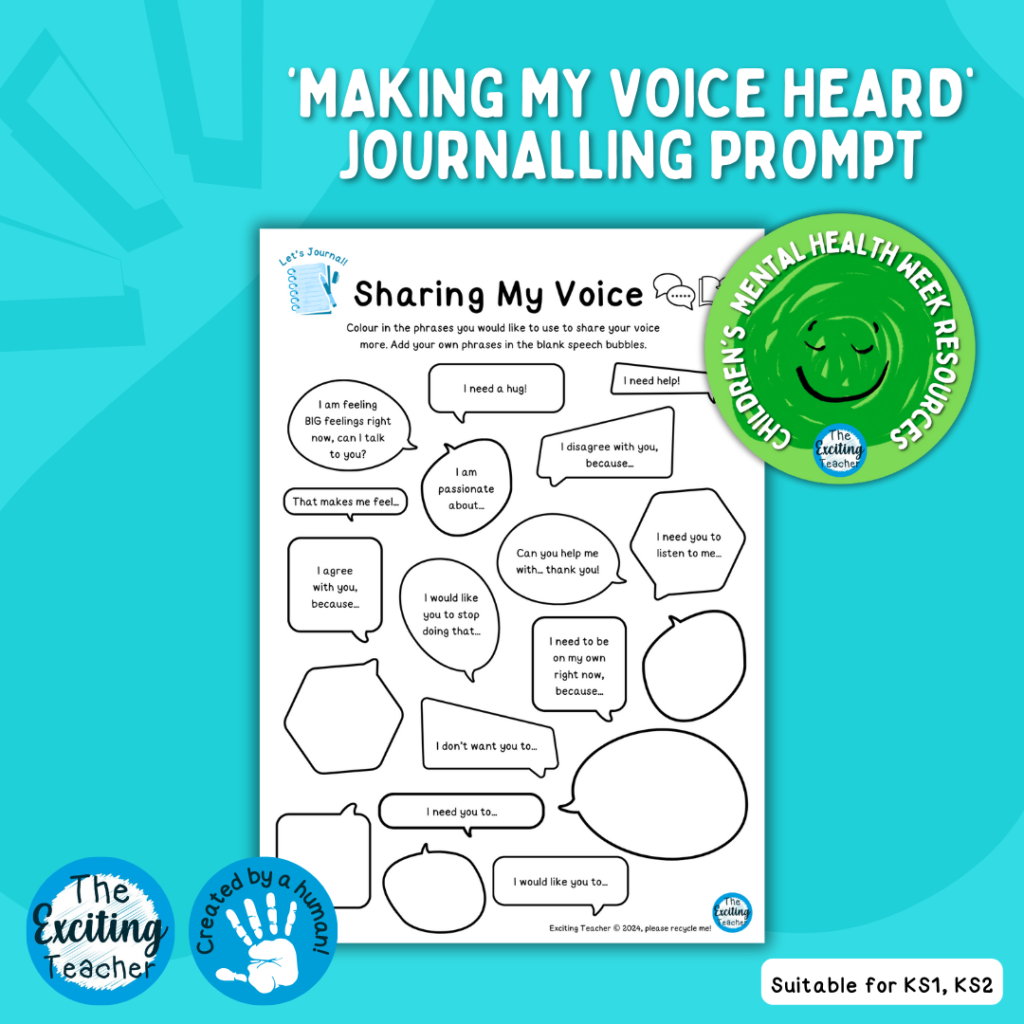
Let's Journal: 'Sharing My Voice' - Reflecting on Achievements Prompt Sheet
Journalling provides a host of benefits for developing minds. The process of journalling allows children to practise expressing thoughts and feelings in writing while also supporting emotional regulation and self-awareness.
By journalling experiences, worries, wishes or daily events in a personal journal, young children can reflect on emotions, gain perspective and build coping strategies.
The very act of writing or drawing about feelings on paper through journalling alone can even help release negative emotions and anxiety. Structured thought-organisation achieved through consistent journalling strengthens fine-motor skills too.
With guidance, adopting journalling presents children with a valuable outlet for developing vital communication abilities alongside managing behaviours and advancing mental health.
H17. about things that help people feel good (e.g. playing outside, doing things they enjoy, spending time with family, getting enough sleep).
H18. different things they can do to manage big feelings, to help calm themselves down and/or change their mood when they don’t feel good.
KS2:
H16. about strategies and behaviours that support mental health — including how good quality sleep, physical exercise/time outdoors, being involved in community groups, doing things for others, clubs, and activities, hobbies and spending time with family and friends can support mental health and wellbeing.
H18. about everyday things that affect feelings and the importance of expressing feelings.
H20. strategies to respond to feelings, including intense or conflicting feelings; how to manage and respond to feelings appropriately and proportionately in different situations.
Scottish Health and Wellbeing Curriculum Outcome(s):
Mental and Emotional Wellbeing:
I know that we all experience a variety of thoughts and emotions that affect how we feel and behave and I am learning ways of managing them. HWB 0-02a / HWB 1-02a / HWB 2-02a / HWB 3-02a / HWB 4-02a.
I understand the importance of mental wellbeing and that this can be fostered and strengthened through personal coping skills and positive relationships. I know that it is not always possible to enjoy good mental health and that if this happens there is support available. HWB 0-06a / HWB 1-06a / HWB 2-06a / HWB 3-06a / HWB 4-06a.
Want to request or suggest a resource? Pop us a message below and we will see what we can do. We are not able to respond directly to all requests but be rest assured, we are reading them and constantly updating the resource bank accordingly to all your fabulous ideas!